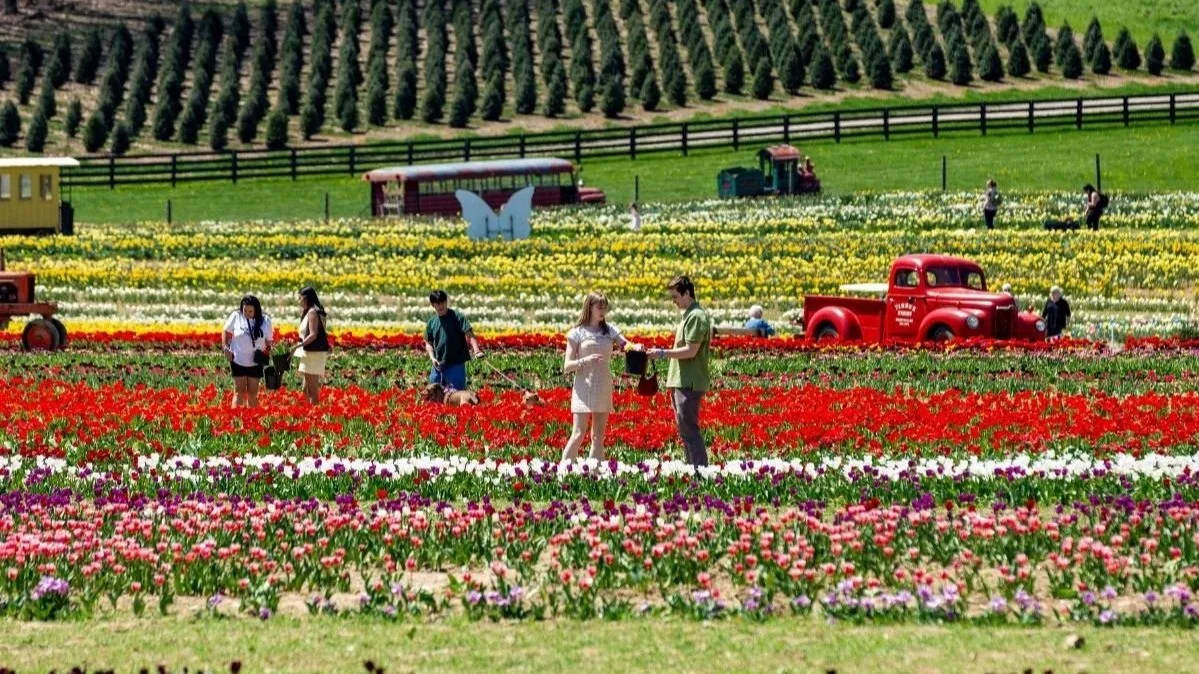
We love tulips here at Timbuk Farms! In fact, we host the famous Tulip Festival in Ohio each year, which is one of the best spring events in Ohio.
During the Tulip Festival, we have over 500,000 colorful tulips across four acres. Plus, we have games, local vendors, live music, yummy food, a petting zoo, a kid’s fun farm, and lots of family fun! So, in honor of our upcoming Tulip Festival, here are eight fun facts about tulips so that you, too, can get excited for spring in Ohio.
1. Tulips are Not Originally from the Netherlands
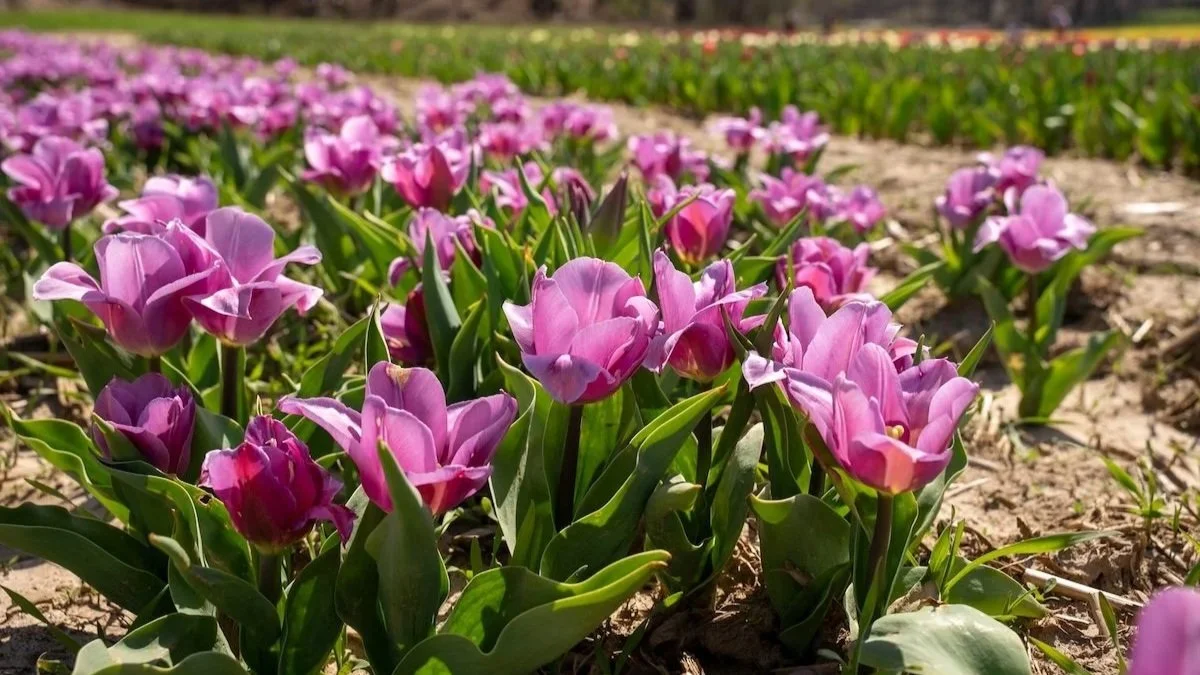
Tulips are actually native to central Asia, even though we usually associate tulips with the Netherlands. As early as the 10th century, tulips were valued as prizes in the Ottoman Empire (modern-day Turkey). The word “tulip” has roots in the Persian word “delband,” which means turban, because people felt like the flower looked like a turban.
2. The Most Expensive Flower in History
People have loved tulips for centuries! So much so that “Tulip Mania” exploded in the Netherlands during the 1600s. There are reports that in 1633 one tulip bulb sold for 5,500 guilders (approximately $221,315.54 in 2026 American dollars).
Tulip Mania’s bubble popped around 1637, but the tulip still remains one of spring’s most popular flowers.
3. Tulips Keep Growing After They’re Cut
Unlike most flowers, tulips continue to grow after they’ve been cut. This is why you may see your tulips in a vase adding an extra inch or more in length. Have you ever noticed your tulips stretching in their vase?
4. A Rainbow of Colors and Shapes
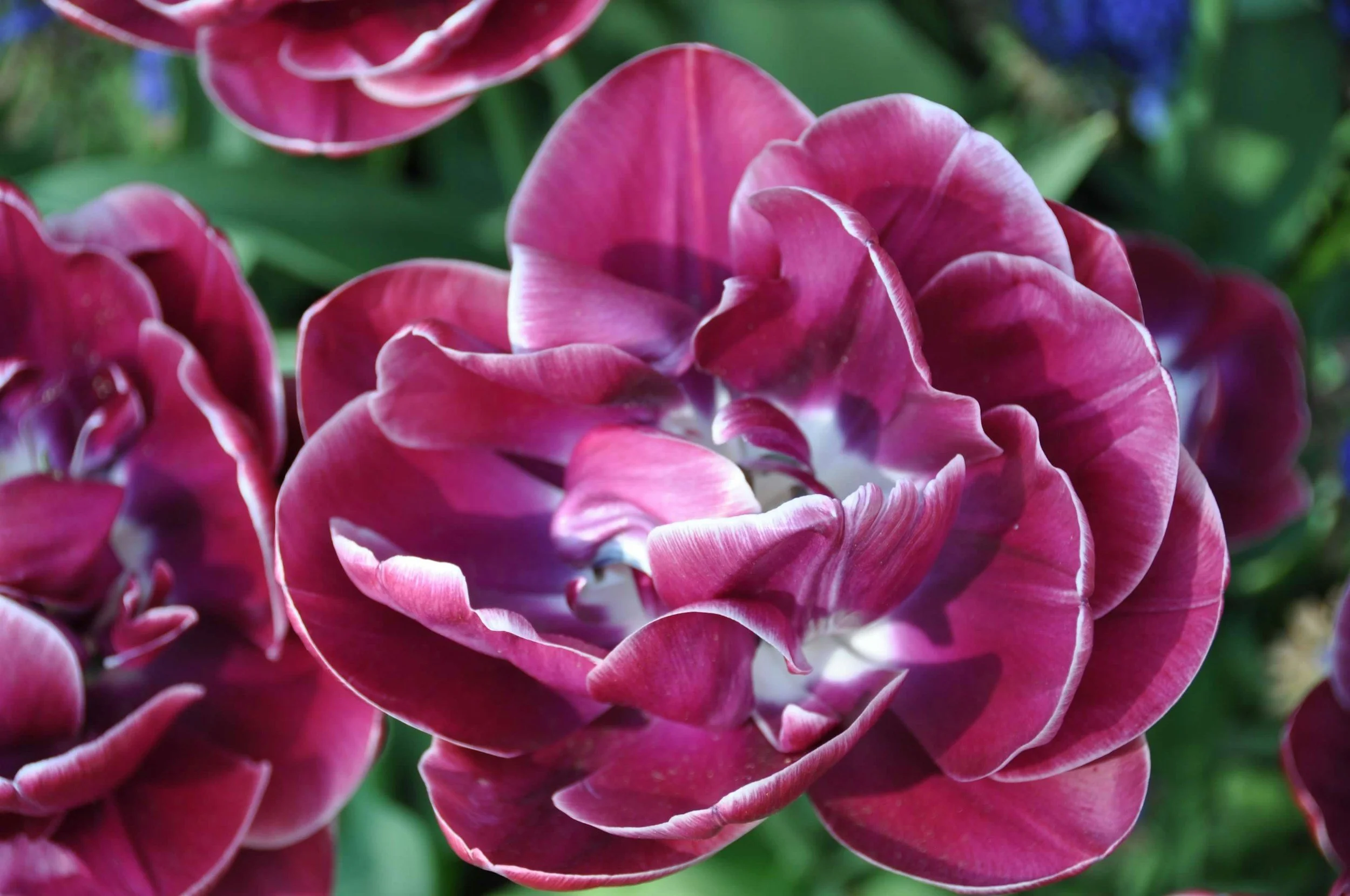
There are over 3,000 varieties of tulips. The shape varieties include the classic cup, the “Parrot” with serrated or fringed petals, and the double that has numerous layered petals that make them resemble peonies.
For colors, tulips come in various shades of pink, purple, green, white, red, orange, cream, and yellow. The Queen of Night variety even looks like a black flower, although it’s really a very deep purple. The only color that tulips do not come in is blue.
5. You Can (Technically) Eat Tulips
Did you know that the great Audrey Hepburn ate tulip bulbs? During the "Hunger Winter" of World War II in the Netherlands, many Dutch people (including Hepburn) ate tulip bulbs to survive.
Today, some chefs use organic tulip petals as a garnish for a crunchy and mildly sweet element.
However, we do NOT recommend eating tulips from a florist or garden center because they may have been treated with chemicals. Plus, tulip bulbs can be toxic if not prepared correctly.
6. Tulips Belong to the Lily Family
Tulips are related to lilies because they are part of the Liliaceae family. This also means that tulips are distant relatives to onions, garlic, and asparagus. Talk about a wild family tree!
7. Tulips Move with Temperature and Light
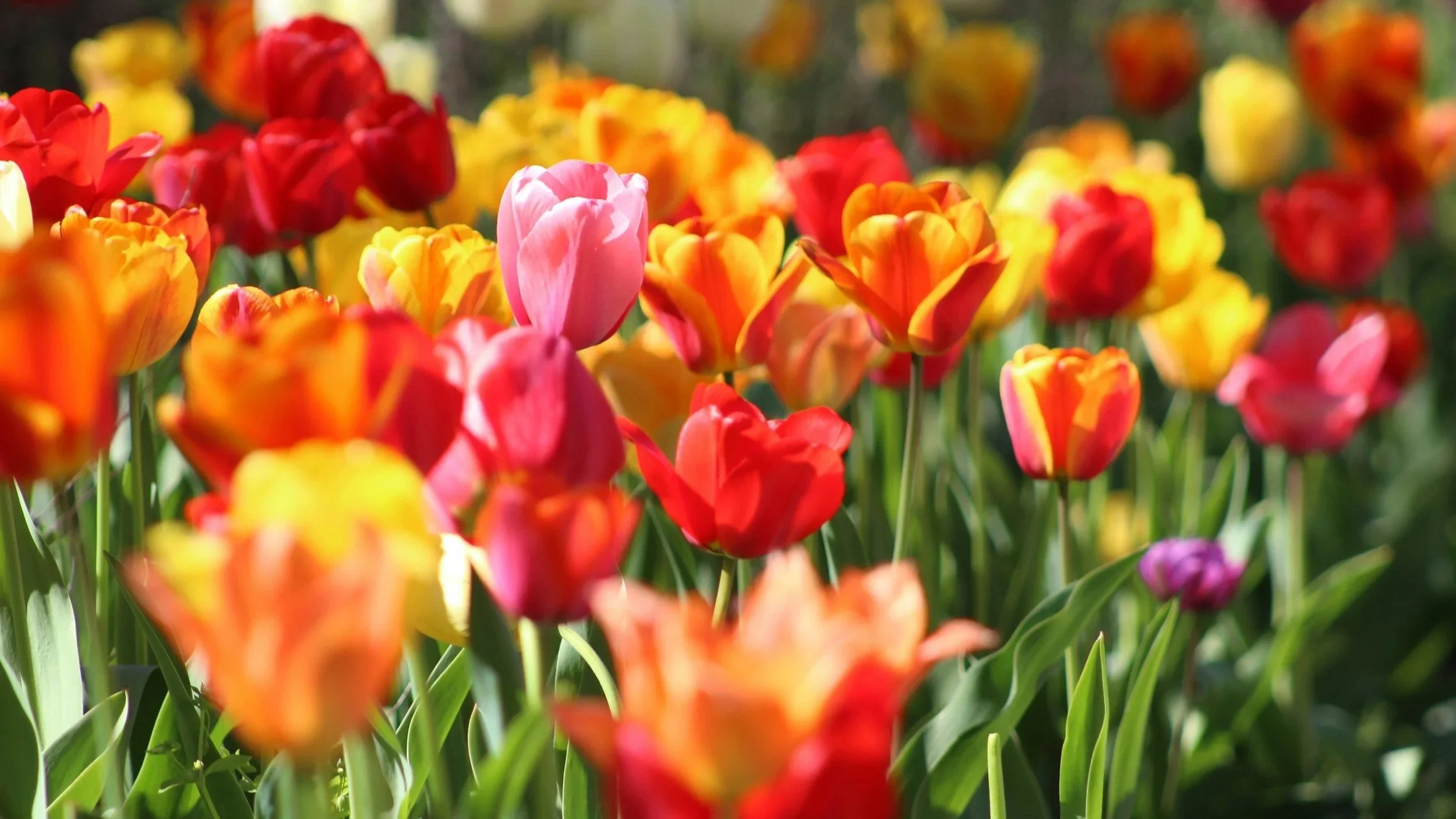
Tulips are thermonastic, meaning they react to temperature changes. Their petals open and close based on how warm or cold the air is. When the air is warm, the petals open wide. When the air is cold, the petals close to protect the flower’s pollen.
Tulips are also phototropic, which means that they’ll twist and bend to follow sunlight.
8. The Most Famous Tulip Had a Virus
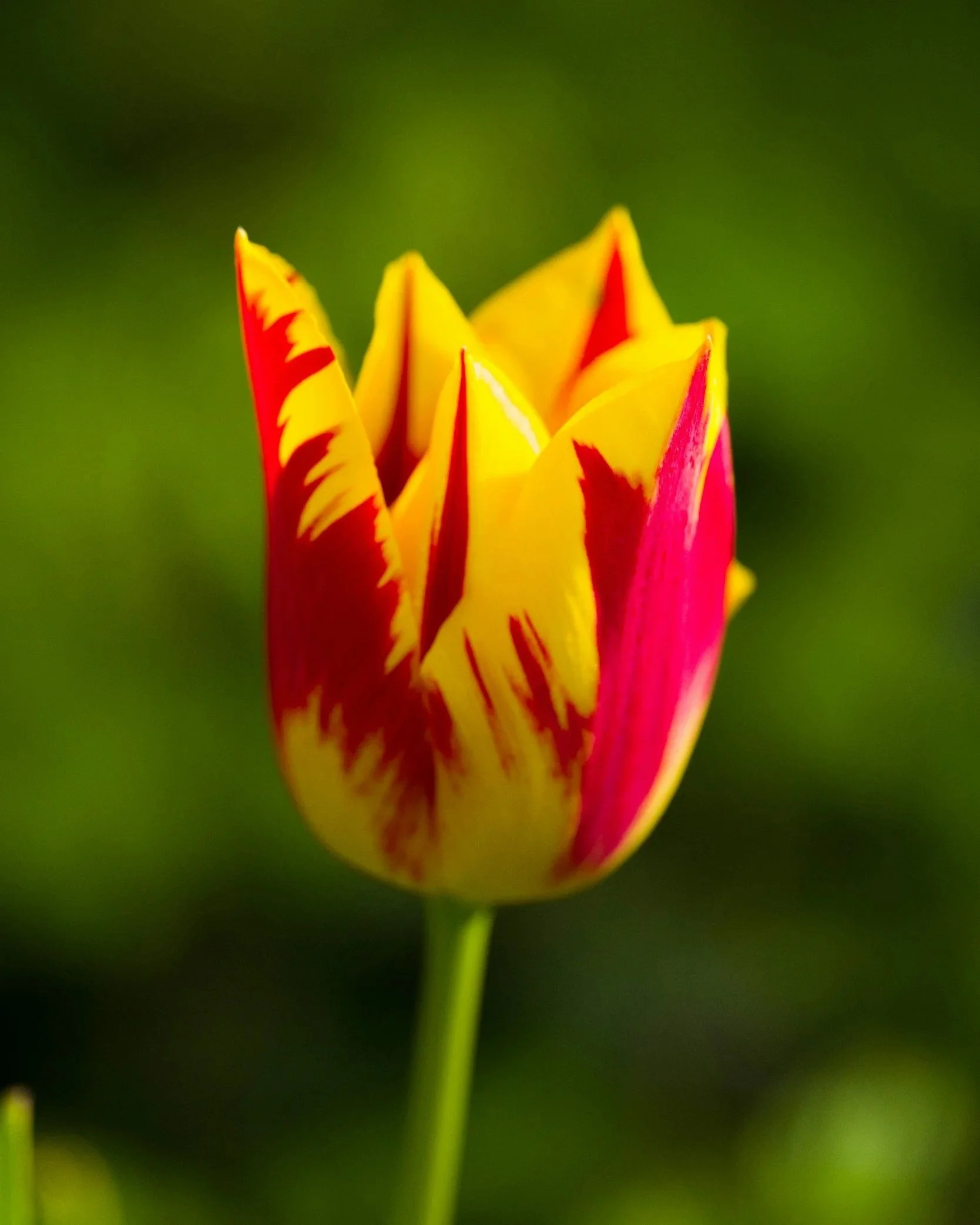
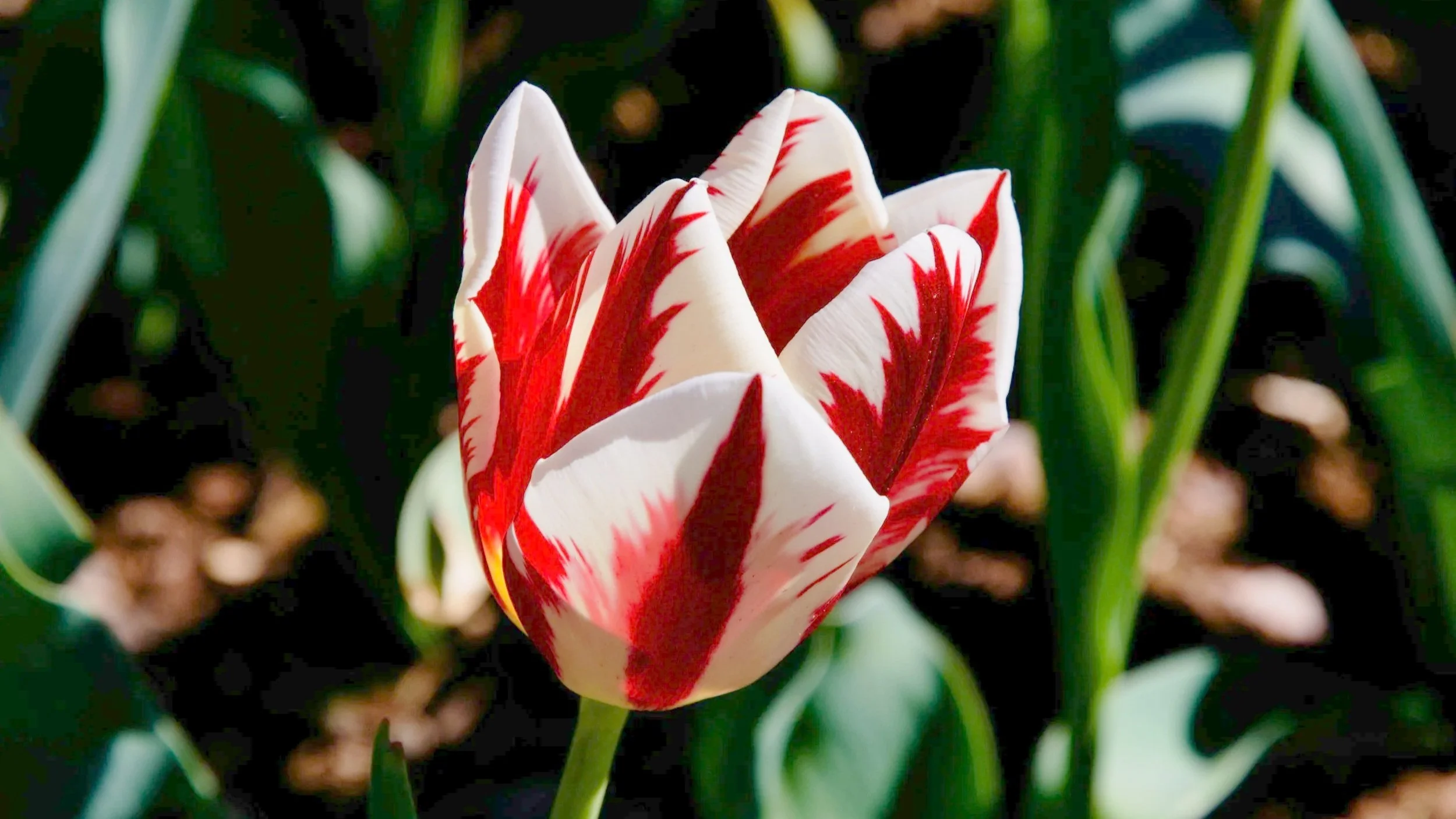
One of the most famous tulips was the Semper Augustus, which had crimson striping and a white base and ruffled petals. It was known as the “King of Tulips” and was revered during the Netherlands’ Tulip Mania. Tulips, like the Semper Augustus, that had two different colors were considered “broken tulips” and were highly desired because, at the time, no one understood what caused the flame-like patterns, stripes, and color variations.
In the 1920s, researchers discovered that a virus, later dubbed the “Tulip Breaking Virus,” caused these beautiful color variations. The problem was that the virus weakened tulip bulbs, and the bulbs would become weaker with each subsequent generation until the bulbs were too weak to produce any flowers.
Today, researchers and growers have discovered ways to create these wonderful color variations without weakening tulip bulbs. So, you can rest easy knowing that today’s “broken” tulips are genetically healthy and ready for you to enjoy season after season.
Join Us This Spring at Timbuk Farms
We invite you to join us this spring in central Ohio for our 5th annual Tulip Festival! Come enjoy the beauty of spring in Ohio with thousands of colorful tulips and family-friendly activities.
You can also stop by our Ohio Garden Center to pick up the healthiest plants in Ohio, all of your gardening supplies, and some local Ohio gardening tips that you just can’t get anywhere else. Plus, you can get your very own Timbuk Farms tulips, which are perfect spring flowers for Ohio.
You can also learn how to care for tulips and how to plant tulips in Ohio by visiting our post, “How to Plant Tulips in Ohio and What to Plant with Tulips.”
We can’t wait to see you this spring!